How Sahil Khan from Noida Removed a Bank Lien from His Kotak Bank Account Within 7 Days – A Real Cyber Fraud Case Study
Online task scams and mule account investigations are increasing rapidly in India. Many innocent people unknowingly become part of fraud transaction chains and later face problems like bank account freeze or lien marking.
This case study explains how Sahil Khan, a working professional from Noida, managed to remove a lien from his bank account within 7 days with the help of proper legal guidance.
Background of the Incident
Sahil Khan was working in a private company in Greater Noida. Like many young professionals, he was searching for part-time freelance work to earn extra income.
One day, Sahil received an online offer for task-based work. The job was simple: complete small online tasks and get paid.
Initially, the offer appeared genuine because the tasks were basic and easy to complete.
The First Task and Payment
Sahil completed the first task successfully. After finishing the work, he received ₹2000 in his bank account as payment.
The payment made him believe the job was legitimate because scammers usually do not send money first. This is a common trick used by fraud networks to gain the trust of victims.
Encouraged by the payment, Sahil agreed to continue with more tasks.
Request for KYC and Bank Details
After the first task, the people offering the work informed Sahil that he could earn more money if he continued.
However, they asked him to provide certain details for payment verification and tax compliance, including:
- Bank account details
- Basic KYC information
- Identity verification
Believing it was part of a normal payment process, Sahil shared his bank details.
The OTP That Raised Suspicion
During the verification process, the person on the call suddenly asked Sahil to share an OTP (One Time Password).
At that moment, Sahil became suspicious.
He asked them:
“Why do you need an OTP just to send payment? I have already provided my bank details.”
As soon as he asked this question, the person cut the call and blocked him immediately.
Sahil thought the matter had ended and ignored it.
However, the real issue started a few days later.
Bank Lien Placed on His Account
After about 3–4 days, Sahil noticed that ₹2000 in his account was placed under lien in his account at Kotak Mahindra Bank.
When he contacted the bank, he was informed that:
- The transaction was linked to a cyber fraud complaint.
- His account appeared in the fraud transaction chain.
- The complainant’s money had passed through multiple accounts before reaching his account.
The bank explained that Sahil’s account appeared in Layer 5 of the transaction chain, meaning the money passed through five different accounts before reaching him.
Because of this, the system flagged his account as a suspected mule account.
What Is a Mule Account?
A mule account is a bank account used to transfer illegally obtained money. Many people unknowingly become mule account holders when they receive money connected to fraudulent transactions.
In cyber fraud investigations, banks often freeze or place a lien on accounts that appear in the transaction trail until the issue is clarified.
Complaint Originated from Kerala
When Sahil asked the bank about the source of the complaint, he was informed that the lien request came from cyber authorities in Kerala.
This created a major challenge.
Sahil was living in Greater Noida, and traveling to Kerala for a ₹2000 issue was practically impossible.
When he approached the local cyber police station, they told him the complaint originated from another state and he would need to contact the concerned authorities.
This left him confused and frustrated.
Searching for a Cyber Crime Lawyer
After several attempts with the bank and police authorities, Sahil started searching online for a cyber crime lawyer in Noida.
He contacted several advocates.
The responses were surprising:
- One advocate demanded ₹50,000 plus travel and hotel expenses to visit Kerala.
- Another asked for ₹35,000 to resolve the issue remotely.
- Some lawyers promised a quick solution but demanded ₹10,000 immediately without properly understanding the case.
For Sahil, who had a modest salary, these charges were extremely high.
Paying the Wrong Lawyer First
Before making a final decision, Sahil hired another advocate who promised to resolve the issue by sending a legal notice.
He paid ₹7000 for the notice.
However:
- The issue remained unresolved.
- The bank lien was still active.
- The advocate stopped responding to his calls.
At this point Sahil felt completely helpless.
Finally Contacting Advocate Deepak
During his research, Sahil repeatedly came across the profile of Advocate Deepak.
After several days of struggle, he finally decided to call him and explain his situation.
Advocate Deepak listened to the problem and clearly said that he would first need to review the case details before giving proper guidance.
He asked Sahil to pay a consultation fee so the matter could be examined properly.
Proper Legal Guidance and Process
After reviewing the case, Advocate Deepak analyzed:
- The transaction chain details
- Cyber complaint records
- Bank lien communication
- The legal procedure required to resolve the issue
Instead of unnecessary travel or expensive litigation, the matter was handled through proper documentation and communication with the concerned authorities.
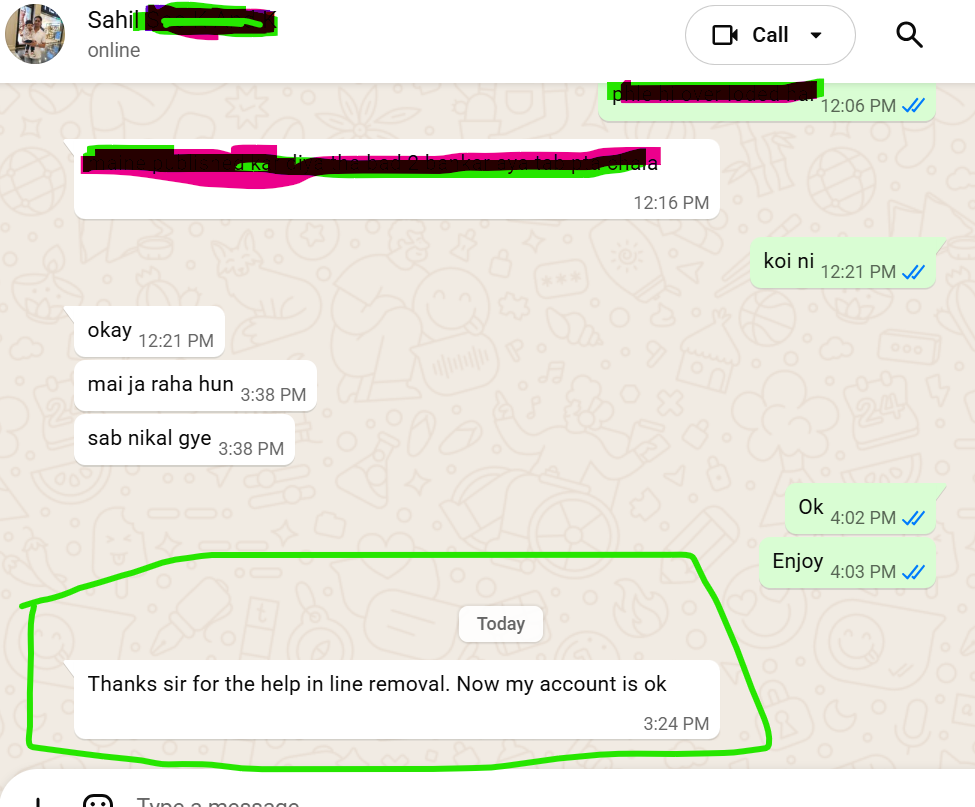
Account Restored Within 7 Days
After following the legal procedure suggested by Advocate Deepak, the issue was resolved quickly.
Within 4 days of initiating the process, Sahil received confirmation that:
- His bank account was restored
- The lien was removed
- The issue had been legally clarified
The entire matter was resolved in approximately 7 days.
Lessons from This Case
Sahil Khan’s case highlights several important lessons:
- Online task jobs can sometimes be linked to fraud networks.
- Never share OTP or banking credentials with unknown individuals.
- Even receiving a small amount like ₹2000 can place your account in a fraud transaction chain.
- Many people unknowingly become part of mule account investigations.
- Proper cyber law guidance can help resolve such issues quickly and legally.
Sahil Khan’s experience shows how easily an innocent person can get involved in a cyber fraud transaction chain. Fortunately, with the right legal guidance and correct procedure, his account was restored within a week.
Anyone facing a similar situation where their bank account has been frozen or placed under lien due to cyber fraud investigations should act quickly and seek professional cyber law advice to resolve the issue properly